Upgrade Your Home Comfort: The Case for a Tankless Water Heater in Joliet, Plainfield, and New Lenox
For decades, the standard approach to hot water has been to fill a massive tank—40, 50, or even 100 gallons—and then spend energy 24/7 to keep it hot, just in case you need it. This wasteful cycle is what we call standby heat loss, and it’s a major contributor to high utility bills.
But what happens when you drain the tank with back-to-back showers? You wait. And you waste more time and energy heating a new batch of water.
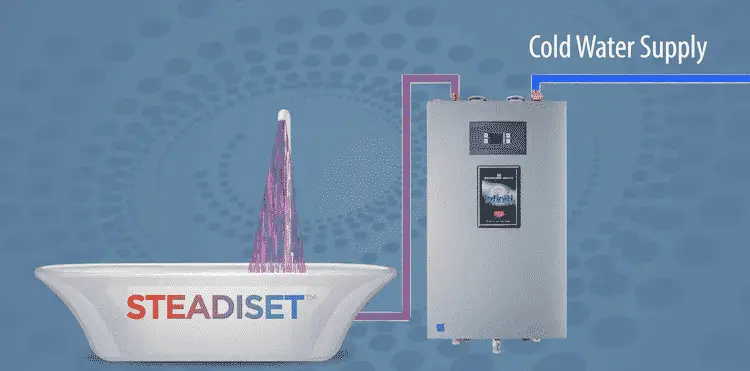
There’s a better way: a tankless water heater. Also known as an on-demand, instantaneous, or continuous flow water heater, this modern system heats water only when you need it, as it flows through the unit. The result? Endless hot water and significant energy savings.
Energy Savings: Stop Heating Water You Don’t Use
Hot water generation is typically the second-largest energy expense in a home, right behind heating and cooling. Switching to a tankless system can put a serious dent in that cost.
Significant Efficiency: For homes that use an average amount of hot water (41 gallons or less daily), a tankless unit can be 24%–34% more energy efficient than a conventional storage tank heater, according to Energy.gov.
Cost Comparison: A typical family of four heating with natural gas might spend around $200 annually on hot water with a standard tank. With an electric tank, that number jumps to about $450. Tankless technology immediately lowers those operating costs.
You only use energy when you turn on the hot water tap—not a second before.
Enjoy Endless Hot Water, On Demand
One of the biggest concerns homeowners have is whether a tankless unit can keep up. The good news is, for most households, the answer is a resounding yes.
Flow Rate: Natural gas tankless heaters can provide 4 to over 6 gallons per minute (GPM), while electric units range from 2.5 GPM to 5 GPM.
Simultaneous Use: Tankless heaters do have a limit on how much hot water they can produce at one time. If you have a large family or frequently run the dishwasher, washing machine, and two showers simultaneously, you might notice a temperature drop.
Solution for High-Volume Homes: For large households or commercial applications, we can install two or more tankless units in parallel to handle any simultaneous demand, ensuring everyone gets the hot water they need.
| Fixture | Average Flow (GPM) | Recommended Temp. |
| Shower | 2.5 – 3.0 GPM | $104^{\circ}$F |
| Kitchen Sink | 1.5 GPM | $110^{\circ}$F |
| Washing Machine | 2.0 GPM | $120^{\circ}$F |
Safety and Space: Ideal for Joliet, Plainfield, and New Lenox Homes
Tankless water heaters solve several common issues associated with traditional storage tanks.
1. Compact, Space-Saving Design
New federal regulations have forced tank water heaters to become even bigger to accommodate thicker insulation. Tankless units, in contrast, are about the size of a small suitcase and hang neatly on the wall. This frees up valuable floor space in your garage, utility room, or basement. They’re perfect for homes, condos, and apartments across the area.
2. Enhanced Safety
Tankless systems eliminate the two major safety concerns of tank units:
No Risk of Flooding: Unlike a storage tank that can rust, burst, or spring a leak and cause thousands of dollars in water damage, a tankless unit contains no stored water.
Reduced Carbon Monoxide Risk: Modern tankless gas units feature sealed air-supply and exhaust vents, meaning poisonous carbon monoxide cannot enter your home due to backdrafting.
Navigating the Hard Water Challenge
If you live in the Joliet area, you know we have particularly hard water (often over 18 grains per gallon). The mineral scale from hard water can reduce the lifespan of any appliance, and tankless units are no exception.
Water Treatment is Key: If your water hardness exceeds 7 grains per gallon, we highly recommend investing in a water treatment system, like a whole-house water softener.
Required Maintenance: If you choose not to install a softener, your tankless unit will require maintenance every year or two (or about every 500 hours of use) to flush the system and remove scale build-up from the heating components. This simple, preventative maintenance is vital for maintaining efficiency and longevity.
Making the Investment: Cost and Payback
It’s true that the initial investment for a whole-home tankless water heater installation—which includes the unit, new piping, venting, and professional installation—is generally higher than a standard tank.
| Feature | Tankless Water Heater | Traditional Tank Heater |
| Lifespan | 20+ Years | 8–12 Years |
| Efficiency | 24%–34% More Efficient | Lower Efficiency Due to Standby Loss |
| Hot Water | Continuous, Unlimited Supply | Limited to Tank Size |
| Risk | Virtually Zero Leak/Flood Risk | High Risk of Catastrophic Leak/Flood |
| Size | Compact, Wall-Mounted | Large, Floor-Standing |
Given the potential to lower your utility bills by 24%–34% and the fact that a quality tankless heater can last two to three times longer than a standard tank, the higher upfront cost makes clear economical and environmental sense over the long run.
The PDM Clean Team has been serving Joliet, Plainfield, New Lenox, Homer Glen, and Bolingbrook since 1885.We are your trusted “Water Heater King,” and we’ve been expertly installing and servicing both tank and tankless systems for 140 years.
Ready to see if a tankless system is the right fit for your home? Call PDM today for a free, no-obligation evaluation of your current hot water system. We’ll provide an exact price and discuss low financing options available to you. Call 815-390-7095